A photograph can be the only surviving record of a childhood home, a military service portrait, a wedding day, or a loved one whose voice and smile are still deeply missed. That is why restored photo examples matter: they show that damage does not have to be the final chapter of a treasured image. With careful digital restoration, many aging prints can become clear, shareable keepsakes again while preserving the character that made them meaningful in the first place.
What Restored Photo Examples Can Show You
Photo restoration is not about making every old picture look brand-new or artificially perfect. It is about repairing what time, storage conditions, accidents, and handling have changed so the people, places, and details in the image can be seen and remembered more clearly.
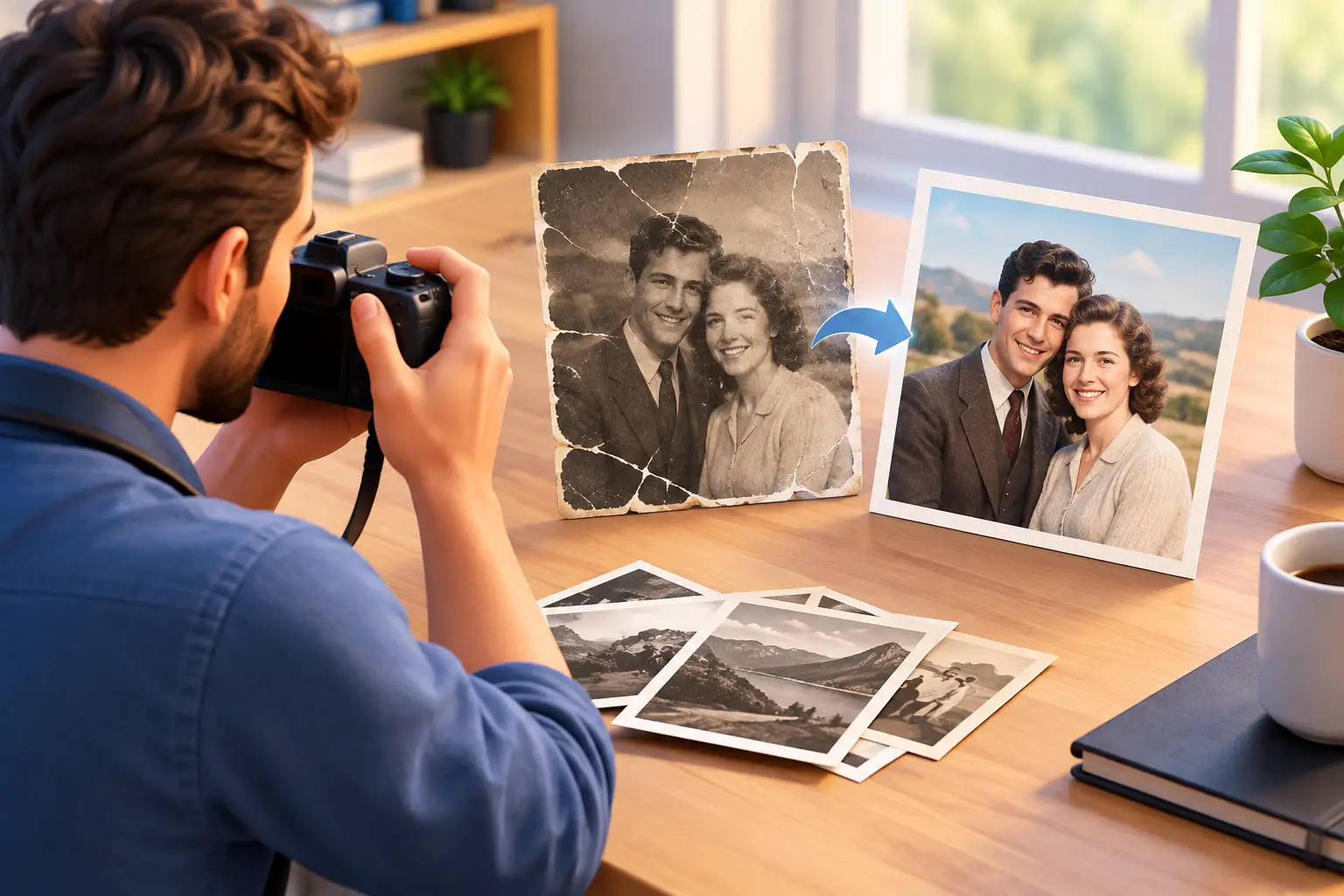
A strong before-and-after restoration often reveals more than a technical improvement. A faded snapshot may bring back the blue of a grandfather’s work shirt. A creased wedding portrait may make it possible to see the bride’s expression again. A scanned school photo with spots and discoloration may become clear enough to print for a family album or display at a memorial.
The best results respect the original photograph. That means preserving natural skin tones, period-appropriate colors, and small details that belong to the moment. The goal is not to rewrite family history. It is to help it endure.
Common Types of Photo Restoration
Every photograph ages differently, so the restoration process depends on the damage, the print quality, and what the family hopes to do with the finished image. A small wallet-size print, for example, may have limited detail compared with a large studio portrait. Both can be restored, but the final possibilities may be different.
Faded color and yellowing
Color prints from the 1960s through the 1990s often develop a yellow, red, or blue cast over time. Sunlight, heat, humidity, and certain photo paper materials can slowly shift the colors until faces look unnatural and backgrounds lose their original depth.
In restored photo examples involving color fading, the difference can feel immediate. A restoration specialist can rebalance color, improve contrast, and recover detail in shadows without turning the image into something overly saturated. Sometimes the right choice is a gentle correction rather than bold color, especially when the source photo has aged heavily.
Black-and-white photographs also fade. They may look dull, gray, or washed out after years in an album, attic, or storage box. Adjusting tone and contrast can return definition to faces, clothing, and scenery while keeping the classic look intact.
Tears, creases, and missing corners
Physical damage is one of the most familiar reasons families seek restoration. A photo may have been folded in a wallet, torn during a move, or damaged when an old album page stuck to the print. Creases can run directly across a face. Corners may be missing. In some cases, a portion of the image may be completely gone.
Digital repair can carefully reconstruct damaged areas using nearby visual information. A torn edge of a dress, a broken background wall, or a crease across a jacket may be repaired with convincing results. Missing portions are more complicated. When there is no visual reference for what was originally there, restoration involves informed reconstruction rather than recovery.
That distinction matters. A trustworthy restoration process should be clear about what can be faithfully repaired and what requires interpretation. For an heirloom image, honest workmanship is more valuable than a result that looks polished but no longer feels true to the original.
Stains, spots, scratches, and water damage
Old photographs frequently carry the evidence of their journey. Tiny white scratches, dark specks, fingerprints, ink marks, mold spots, and water stains can distract from the people in the picture. Even a photo stored carefully may develop damage as paper and chemicals age.
These issues are often among the most rewarding to repair. When surface marks are removed and detail is brought back, a portrait that once seemed beyond saving can look surprisingly clear. Water damage can be more difficult because it may blur faces, lift the image layer, or permanently remove detail. Still, a professional scan and careful digital work can often improve a water-damaged photo substantially.
Damaged faces and important details
The most emotionally difficult damage often lands in the worst possible place: a scratch over someone’s eye, a stain across a child’s face, or a tear through a couple standing together. Restoring faces requires restraint and close attention. Features should remain recognizable, not smoothed into an unfamiliar version of the person.
Details matter, too. A uniform insignia, a wedding bouquet, a handwritten sign, or the name on a boat may be central to the story behind the image. Restoration can improve visibility, but it cannot reliably create details that were never captured or have been fully lost. A good restorer works to enhance what is truly present rather than guessing at history.
Before-and-After Results Depend on the Original
Restored photo examples can be inspiring, but they should also set realistic expectations. A high-quality original print with light fading generally offers more to work with than a tiny, blurry copy that has been photographed on a phone. The better the scan, the more accurately restoration can address color, texture, and fine detail.
If you have the original print, bring or send that rather than relying on a screenshot or social-media image. Original negatives, slides, and high-resolution digital files can be especially valuable sources. They may contain detail that no longer appears in a duplicate print.
Size is another factor. A restored photo can often be printed again, but enlarging it dramatically may expose grain, blur, or missing detail. For example, a repaired 4-by-6-inch print may look beautiful when reprinted at its original size or modestly enlarged, while a wall-size version may need more careful evaluation. The intended use should guide the restoration plan from the beginning.
What a Careful Restoration Process Looks Like
Professional photo restoration begins with a high-quality scan. Scanning captures more consistent detail than photographing a print with a phone, and it gives the restorer a strong digital foundation without altering the physical original.
From there, the work is usually completed in stages. Overall corrections address fading, exposure, and color balance. Next come repairs to scratches, stains, tears, and creases. Fine adjustments then focus on faces, clothing, backgrounds, and edges. This measured approach helps prevent the over-edited look that can make an old photograph feel less authentic.
Reviewing a preview is especially helpful for family photos. You may recognize a detail that needs special attention or prefer a softer restoration that retains the photo’s age and mood. At AWV Production, the focus is on treating each image with the same care you would give the memory behind it, with clear communication about the result you can expect.
Preserving the Restored Image for the Future
Once a photo has been restored, it deserves a preservation plan that goes beyond saving one copy on a computer. Keep the digital file in more than one place, such as a flash drive and secure cloud storage. Give files clear names that include the people, approximate date, and occasion whenever possible. Years from now, that context may be as valuable as the image itself.
For printed copies, use archival-quality materials and avoid direct sunlight, damp storage areas, garages, and attics with extreme temperature changes. It is also wise to keep the original photograph, even after restoration. The restored file preserves the viewable image; the original remains part of the family’s history.
A restored photograph can become a framed gift, a memorial display, a wedding slideshow moment, or the opening page of a family history book. More simply, it can return a face to the conversation. If an old picture has been sitting in a box because its damage made it hard to enjoy, bringing it back into view may be one of the most meaningful things you do with it.