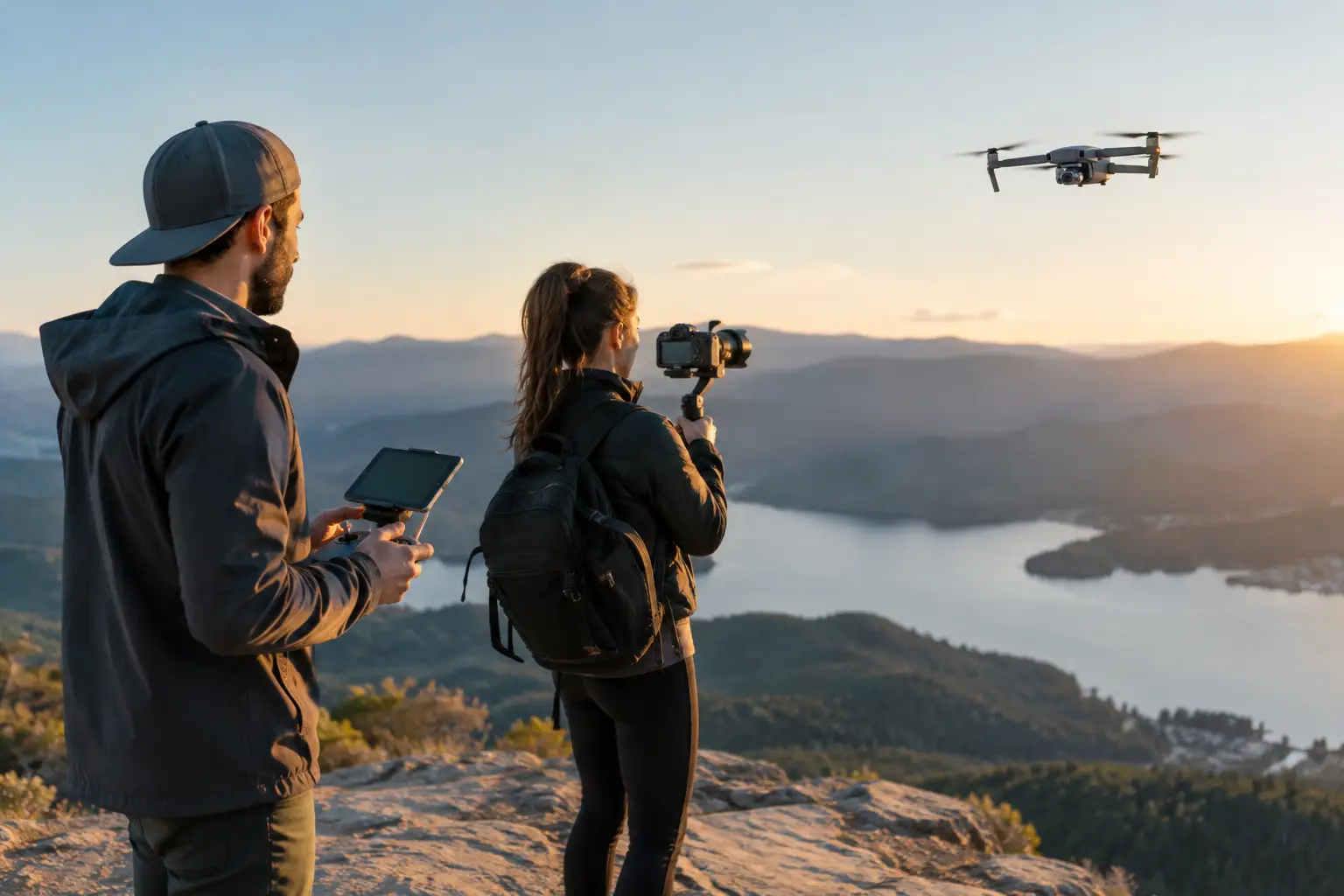
A wedding venue looks different when you can see the oak-lined entrance, the ceremony space, and the people gathering below in one graceful view. A business location has more impact when customers understand where it sits, how it operates, and what makes it distinct. Drone videography creates that perspective – but the best aerial footage does more than look impressive. It gives a story room to breathe.
For couples, families, businesses, real estate professionals, and event organizers, aerial video can turn a familiar setting into a meaningful part of the final film. The key is using it with purpose, professional planning, and respect for the moment happening on the ground.
What Drone Videography Adds to a Video Story
Aerial footage establishes context quickly. Instead of opening on a close-up with no sense of place, a video can begin with a wide view of a waterfront venue, a neighborhood, a commercial property, or an outdoor event. The viewer immediately understands the setting before the story moves closer.
That sense of scale is especially valuable in Northeast Florida. A coastal wedding, a community festival, a construction project, or a Jacksonville business campus may have visual details that simply cannot be captured from ground level. A drone can show the shoreline, surrounding landscape, traffic flow, building footprint, or event energy in a way that feels natural rather than forced.
Just as importantly, aerial shots create visual rhythm. A polished video often moves between wide, medium, and close views. The drone provides an elegant wide shot, while ground cameras capture expressions, conversations, product details, and the personal moments that give a film its heart. Neither replaces the other. Together, they create a fuller record of the day or message.
Drone Videography for Weddings and Milestone Events
At a wedding, the aerial view can preserve details couples may not have had time to take in themselves. It can show the venue before guests arrive, the ceremony site as loved ones gather, or the reception glowing after sunset. These shots help tell the story of the whole celebration, not only the moments directly in front of the couple.
Still, a wedding is not a movie set. The ceremony, guests, and couple always come first. Professional drone videography should be planned around the schedule so it does not become a distraction or add unnecessary noise during a quiet exchange of vows. In some cases, the strongest choice is to capture aerial footage before the ceremony begins or during a transition, then focus entirely on ground-level coverage when emotions are most immediate.
The same principle applies to anniversaries, reunions, birthday celebrations, and community events. A sweeping aerial shot can show the scale of the occasion, but the smiles, speeches, and shared memories are what make the finished video personal. The goal is never aerial footage for its own sake. It is to preserve an unforgettable story with more depth.
A Stronger View for Businesses and Properties
For a business, aerial video can answer practical questions before a customer ever visits. Where are you located? How large is the facility? What does the property look like from the road? Is there outdoor space, convenient access, or a distinctive setting that supports the brand?
This is useful for company profile videos, promotional campaigns, event recaps, hospitality marketing, construction updates, and real estate listings. A restaurant near the water, a venue with a large outdoor area, or a contractor completing a major project can all benefit from visuals that show the larger picture.
But a drone shot cannot carry a business video by itself. Viewers still need a clear message. They need to see the people behind the company, understand the service offered, and feel confident in the experience they can expect. Aerial footage works best as supporting evidence – proof of place, scale, quality, and momentum – within a video built around a focused message.
When aerial footage makes the most sense
Drone footage is often a smart fit when the location itself matters to the story. That may include a scenic wedding venue, a large commercial property, a golf course community, an outdoor festival, a waterfront event, or a project that changes visibly over time.
It may be less useful for an interview-led training video filmed entirely indoors, a small product demonstration, or a message where the location adds little meaning. In those situations, investing in better lighting, clear audio, thoughtful editing, and strong on-camera direction may create more value than adding aerial shots.
Planning Makes the Footage Look Effortless
The smooth, cinematic movement people associate with drones comes from preparation. Before a flight, a professional video team considers the location, surrounding airspace, weather, obstacles, event timing, and the specific shots that will serve the final edit. Safe operation is part of the production process, not an afterthought.
Weather can be a deciding factor in Florida. Bright sun can create beautiful water and landscape images, but strong wind, summer storms, or changing light may limit what is possible. A flexible plan matters. Sometimes the best aerial footage is captured earlier in the day, on a different date, or during a brief window when conditions are safe and visually appealing.
Venue rules also matter. Private venues may have their own requirements, and certain locations have airspace restrictions or other conditions that affect whether a drone can be flown. A professional should confirm what is possible rather than promise footage before reviewing the location. This protects the client, guests, and production team while preventing last-minute disappointment.
A shot list should support the final edit
Good drone video is not a collection of random flyovers. It is captured with the final story in mind. For a wedding, that may mean an establishing view of the venue, a slow reveal of the ceremony area, and a sunset view of the reception space. For a business, it may mean a clean approach to the building, a view that highlights access or surroundings, and a wide shot that transitions naturally into interior footage.
Planning a few intentional shots is usually better than gathering too much aerial material with no clear purpose. It keeps filming efficient and gives the editor footage that fits naturally with interviews, music, ground cameras, photos, and key moments from the event.
What to Expect From the Editing Process
Aerial footage should feel like part of one cohesive film. The color, pacing, music, and transitions need to match the rest of the video. A dramatic wide shot may open a highlight film beautifully, while a shorter aerial clip can add energy between interview sections in a company video.
Editing is also where restraint matters. If every other shot is from the sky, the footage can lose its impact and pull attention away from the people who matter most. A well-edited video uses aerial scenes at meaningful points – to introduce a place, mark a transition, reveal a setting, or close on a memorable view.
For clients, preview-based editing creates an opportunity to make sure the final film feels right. You may prefer more focus on family reactions, want a specific building feature included, or decide that a particular scenic shot belongs near the ending. Collaborative feedback helps turn professionally captured footage into a video that feels genuinely yours.
Choosing a Drone Video Team You Can Trust
When comparing video providers, ask how they approach both the flight and the story. Technical equipment matters, but so do communication, planning, safe operation, and editing experience. You want a team that listens to what matters to you, explains what can realistically be captured, and has a clear plan for integrating aerial footage with the rest of the production.
It is also worth discussing the final deliverables early. Depending on the project, you may want a complete event film, a short highlight video, social media-ready clips, a business promotion, or digital files for long-term storage and sharing. Clear expectations help make the production process comfortable from the first conversation through the final preview.
At AWV Production, the goal is to create high-quality video that feels personal, polished, and worth revisiting. Whether the story is a once-in-a-lifetime celebration or a growing local business, the right aerial perspective can help people see not just where it happened, but why it mattered.
The best time to discuss drone footage is before the schedule is finalized. Share the location, the purpose of the video, and the moments you most want preserved, then build an aerial plan that serves the story from the ground up.