A cassette may fit in the palm of your hand, but the voice on it can bring an entire season of life back into the room. A trusted cassette conversion service helps protect those irreplaceable recordings before age, heat, humidity, or a failing tape player makes them harder to hear. Whether the tape holds a parent’s laugh, a child’s first words, a wedding toast, a favorite local band, or an important interview, the goal is simple: preserve what matters in a format your family can enjoy again.
Unlike a photo that can be viewed at a glance, cassette recordings need the right equipment and careful handling to be heard. That is why the service you choose matters. Good conversion is not just pressing play and recording whatever comes through the speakers. It is a hands-on process that respects the condition of the tape and the meaning behind it.
What a Cassette Conversion Service Should Do
Most people think of standard audio cassettes when they hear the word cassette, but collections can also include microcassettes, mini cassettes, and specialty formats. Before any transfer begins, a professional should identify the media type and confirm that it can be played on the proper equipment. Using the wrong player can damage a tape or produce poor audio.
A quality cassette conversion service captures the recording in real time, creating a digital copy while monitoring playback. The technician should listen for issues such as low volume, uneven speed, excessive hiss, tape dropouts, or moments where the tape sticks. Not every flaw can be removed, especially when the original recording was made with basic equipment, but careful capture gives the material its best chance of sounding clear and natural.
The finished audio can be provided as a digital file for convenient listening and sharing. Many families prefer a USB drive because it is easy to keep with other important records. Others appreciate cloud-based delivery for sharing recordings with relatives in different states. CDs may still be a good fit for someone who enjoys using a traditional stereo system, though digital files are generally the most flexible option for the future.
Why Older Cassettes Need Attention Now
Magnetic tape is not permanent. It can stretch, curl, shed material, or become brittle over time. A cassette stored in a hot Florida attic, garage, or car may have experienced more wear than one kept in a temperature-controlled closet. Even a tape that looks fine can have hidden problems after decades of sitting unused.
The cassette shell itself can also cause trouble. Pressure pads may wear down, rollers can stiffen, and the tape can become unevenly wound. A playback deck that has not been maintained may add its own issues, including warbling sound or damage to the tape. This is one reason a sentimental recording is not the best item to test on an old player found in storage.
Converting a cassette does not erase the past or turn every recording into studio-quality audio. It does, however, reduce the need to repeatedly play a fragile original. Once the recording is digitized, you can listen to the digital copy as often as you like while keeping the cassette safely stored as part of your family archive.
Sound Improvement Has Real Limits
Basic audio cleanup can often reduce steady background hiss, balance a quiet recording, or make speech easier to understand. Used with restraint, these adjustments can make a meaningful difference. But heavy noise reduction can also make voices sound thin, metallic, or unnatural.
A professional approach starts with preserving the character of the original. A recording of a family gathering from 1987 should still sound like it was captured in a living room in 1987. The purpose is to help listeners hear the people and moments more clearly, not to replace the history held in the tape.
How to Choose a Cassette Conversion Service
Look for a provider that treats the cassette as more than an order number. You should be able to ask how recordings are handled, what digital formats are available, and whether someone monitors the transfer process. Clear answers are a good sign that the provider understands both the technical work and the responsibility involved.
Local service can offer valuable peace of mind when the tapes are truly irreplaceable. For Jacksonville-area families, working with a nearby media preservation professional means you can drop off your collection instead of packing it for shipment across the country. It also gives you a real person to speak with if you have questions about unusual tapes, labeling, delivery options, or recordings that need special attention.
Price matters, but it should not be the only deciding factor. A low advertised rate may not include the final digital files, a USB drive, basic audio adjustment, or transfers of tapes that run longer than a set length. Ask what is included and whether there are additional charges for damaged tapes, multiple copies, file organization, or special formats. Knowing the full scope upfront helps you make a confident choice.
It is also worth asking how the files will be named and delivered. A folder of files labeled only “Track 001” through “Track 024” is difficult to navigate years later. When possible, useful labels such as “Grandma Interview – 1994” or “Wedding Reception Toasts” make the collection easier for everyone to enjoy.
What Happens During a Professional Transfer
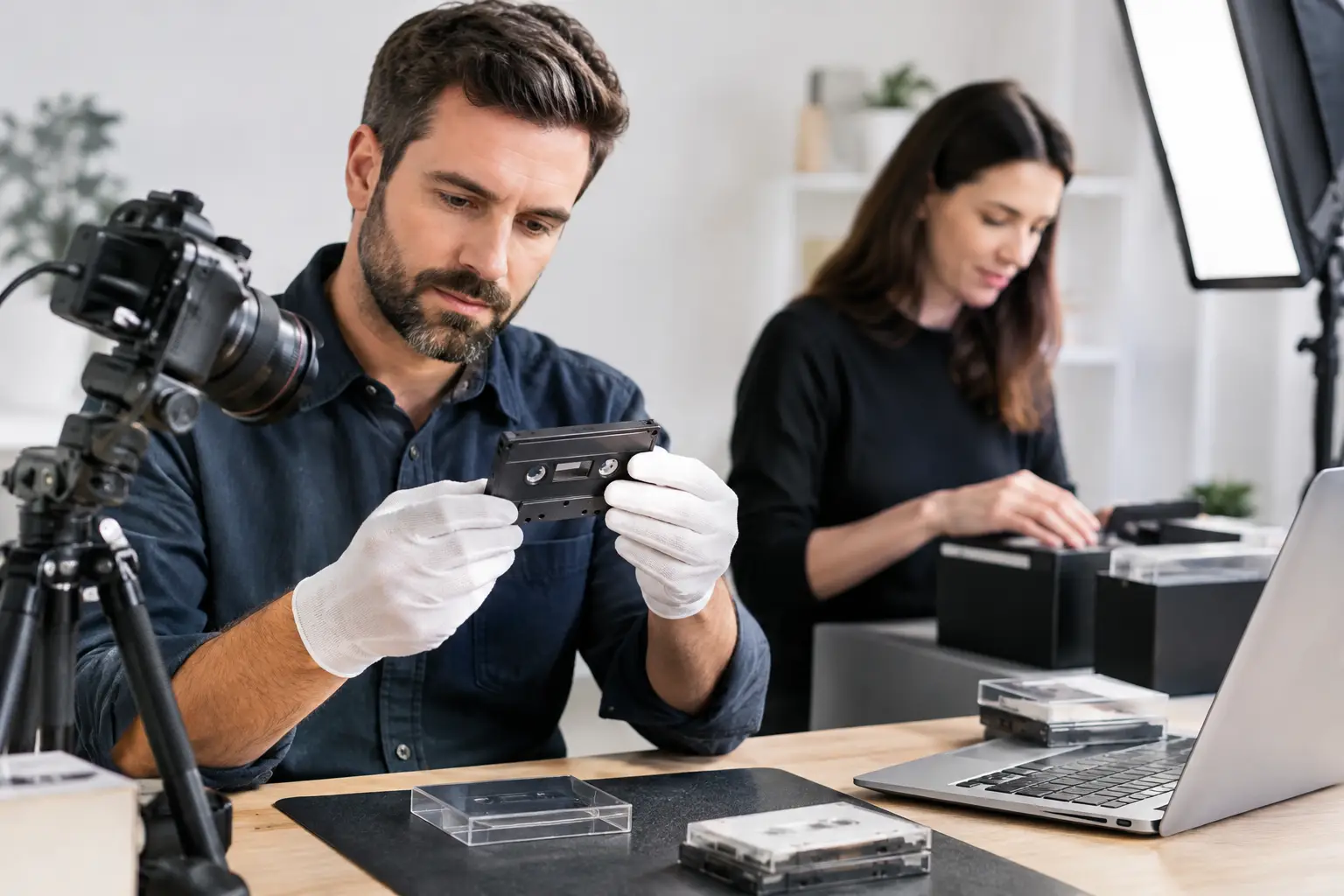
The work usually begins with an inspection. The cassette is checked for visible damage, loose tape, mold, or a broken shell. If the tape is tangled or the shell has failed, a technician may need to address that problem before playback. Mold is a more serious concern because it can damage both the tape and the equipment, so it should be assessed carefully rather than played immediately.
Next comes playback and digital capture. The tape is run through compatible equipment while the sound is recorded to a computer. Monitoring matters here. A person can notice when a side ends early, a tape changes speed, or a recording contains an unexpected gap that may require a closer look.
After capture, the audio may receive light correction where appropriate. The original recording remains the reference point. Finally, the files are organized and prepared for the requested delivery method. At AWV Production, the focus is on making this process approachable, so customers understand what they will receive and can feel confident their recordings have been treated with care.
Preparing Your Cassette Collection
You do not need to do extensive work before bringing in your tapes, but a little organization can preserve useful context. If you know names, dates, locations, or the events recorded, write them down. The details that feel obvious now can become valuable family history later.
Before your appointment, it helps to:
- Keep tapes away from magnets, direct sunlight, damp areas, and extreme heat.
- Leave any loose, tangled, moldy, or broken tapes as they are rather than trying to force them through a player.
- Group recordings by family member, year, event, or project when possible.
- Include notes about anything especially meaningful, such as a final voicemail-style message or a recording with hard-to-hear speech.
If the cassette labels are faded or incomplete, do not worry. A short note with your best guess is still helpful. “Dad’s work stories, early 1990s” can be enough to give a file a meaningful name and help future listeners understand what they are hearing.
Digital Files Still Need a Preservation Plan
Conversion is a major step, but long-term care does not end when the files are delivered. Keep at least two copies of your recordings in separate places. For example, you might store one copy on a USB drive at home and another on a computer or secure cloud account. If one device fails, your memories are not left in a single location.
Check the files occasionally, especially if they are stored on a flash drive or external hard drive. Technology changes, and storage devices can fail without warning. Moving your audio to current storage every few years is far easier than trying to recover files after a device stops working.
You may also want to keep the original cassettes, even after conversion. Store them upright in their cases in a cool, dry area. The digital copy will be your everyday listening version, while the original remains a physical piece of the story.
A Recording Is More Than Its Sound
Old cassettes often hold the voices that photographs cannot preserve. They capture accents, jokes, pauses, singing, the background sounds of a childhood home, and the way someone said your name. For businesses and organizations, they can also preserve oral histories, interviews, meetings, training material, and local stories that deserve a more secure future.
The best time to convert a cassette is while it can still be played safely. Gather the tapes that matter most, add whatever details you remember, and give those voices a place where they can be heard by the people who come after you.