A tape can look perfectly ordinary until someone presses play and hears a grandparent laugh, sees a child’s first steps, or watches a wedding send-off that happened decades ago. Jacksonville video transfer gives those moments a safer future by moving aging recordings into accessible digital formats before time, heat, humidity, and repeated playback take their toll.
For many families, the hardest part is not deciding whether old tapes matter. It is knowing who to trust with the only copy. A local transfer service offers something a mail-in box cannot: the chance to hand off your media in person, ask questions, and know where your cherished recordings are throughout the process.
Why Old Video Should Not Wait
VHS, VHS-C, MiniDV, Hi8, Digital8, and camcorder tapes were never designed to last forever. Magnetic tape can weaken, shed material, become brittle, or develop playback issues over time. Florida’s heat and humidity can add another layer of concern, especially for tapes stored in garages, attics, sheds, or closets near exterior walls.
The footage may still play today, but that does not guarantee it will play cleanly next year. A tape that jams, squeals, or shows streaks on screen can be difficult to recover without the right equipment and careful handling. Even when a tape is in good condition, each playback creates wear. Transferring it lets you enjoy the memories without repeatedly relying on an aging format.
There is also a practical reason to act now. Working VCRs and specialty camcorders are becoming harder to find and maintain. The longer a family waits, the fewer dependable options may be available for playing the original media correctly.
What Jacksonville Video Transfer Can Preserve
Every box of home media tells a different story. One family may have a stack of labeled VHS tapes from birthdays and holidays. Another may have a small camcorder tape containing the only recording of a loved one who has passed away. A local business might have older training videos, event coverage, or promotional footage worth preserving for its history.
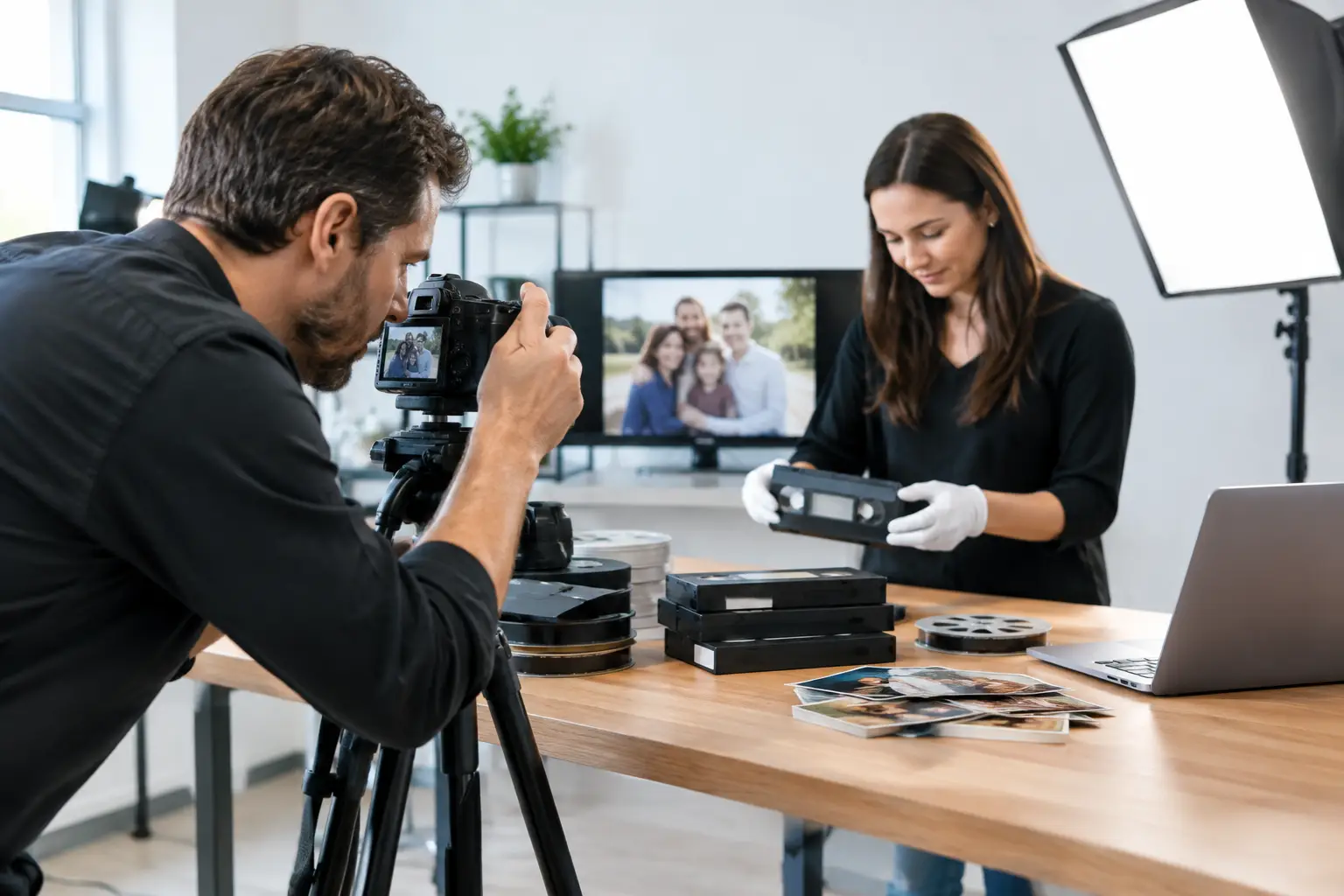
A professional transfer process can help convert common videotape formats, film reels, and audio recordings into files that are easier to watch, copy, and share. The best delivery option depends on how you plan to use the material. A USB drive works well for viewing on a computer or compatible television. Digital files can make it easier to share clips with relatives. DVDs can still be useful for family members who prefer a familiar, physical format.
For irreplaceable recordings, it is wise to have more than one copy. Keep one accessible copy for regular viewing, then store a backup in a different location. Many families also choose to keep the original tape after transfer. The original remains part of the family archive, while the digital copy becomes the version everyone can safely enjoy.
Local Handling Makes a Meaningful Difference
Sending precious tapes across the country can feel unsettling, particularly when the package holds the only video of a wedding, reunion, military homecoming, or childhood celebration. Local service does not make every preservation challenge disappear, but it does make the experience more personal and transparent.
When you work with a Jacksonville-area provider, you can bring in your media, explain what is on it, and identify the tapes that matter most. That conversation is useful. Labels are often incomplete, handwritten, or wrong. A tape marked “Christmas 1998” may also contain a school recital, a birthday, or footage recorded over a much older event.
Local support is especially helpful when a tape needs extra attention. Some recordings have tracking issues, damaged cases, or sections that play inconsistently. Results depend on the condition of the media, and no responsible provider should promise to make every deteriorated tape look brand new. Still, careful playback and professional capture equipment can often produce a much better outcome than trying an old machine at home.
Preparing Your Tapes for Transfer
A little organization makes the transfer process easier and helps protect context that could otherwise be lost. Before bringing in your collection, group tapes by format and place them in a sturdy box. If cases are available, keep each tape in its case. Avoid using sticky notes directly on a tape shell, especially if the adhesive is old or lifting.
Write down anything you know about each recording. Approximate dates, names, events, and locations can become valuable later when someone is searching through the finished files. If there are tapes you want handled first, mark those clearly on a separate inventory sheet rather than placing labels over vents or moving parts.
Do not attempt to force a tape that is stuck or visibly damaged into a player. If the tape has mold, a broken shell, loose tape, or an unusual odor, set it aside and mention the issue during drop-off. Trying to fix it without the proper tools can cause more damage to the footage.
It also helps to think ahead about what you want from the final files. Do you want each tape delivered as its own video file, or do you want selected moments edited into a shorter family highlight? Are there several relatives who need copies? Will you want DVDs, USB drives, or a combination? Clear expectations make it easier to choose an option that fits both your family and your budget.
Quality Is More Than a File Conversion
A video transfer is not simply a matter of pressing play and recording whatever comes through. Capture quality depends on properly maintained playback decks, correct settings for the source format, and monitoring throughout the process. It also depends on respecting the original footage. Older home video will still look like older home video, with the character of the camera, lighting, and tape it was recorded on. The goal is an honest, watchable digital version that retains the memory rather than creating artificial results.
This is where a hands-on studio can offer real reassurance. At AWV Production, preservation is approached with the same care used to produce new video stories: thoughtfully, professionally, and with an understanding that the content matters to the people who own it. Whether the recording is a family keepsake or a piece of an organization’s history, it deserves focused attention.
Preview-based communication can be valuable when a customer wants editing beyond a straightforward transfer. A wedding tape might benefit from trimming long gaps or combining ceremony and reception footage. A business may want older footage incorporated into a new anniversary video or brand story. Those choices should be collaborative, because the right amount of editing depends on the purpose of the video and the memories you want to retain.
Make the Digital Copy Easy to Enjoy
The most successful preservation projects do more than move files from one format to another. They make it likely that the footage will actually be watched. Give files clear names with dates and events when possible. Create folders for family branches, holidays, school activities, or travel. If a recording has several events, add a short note describing what appears in it.
Consider sharing copies with relatives while the people and stories on screen can still be identified. Watching old footage together often brings out details that were never written down: a favorite recipe, a nickname, the name of a childhood pet, or the story behind a long-ago trip. Those conversations can become just as meaningful as the video itself.
For families in Jacksonville, Jacksonville Beach, Orange Park, St. Augustine, Fleming Island, and Nocatee, local video transfer can turn a box of aging tapes into something far more usable: a collection ready for reunions, anniversaries, memorials, and ordinary evenings when someone simply wants to remember. Start with the tape you would be most heartbroken to lose, label what you know, and give that story a safe way to live on.