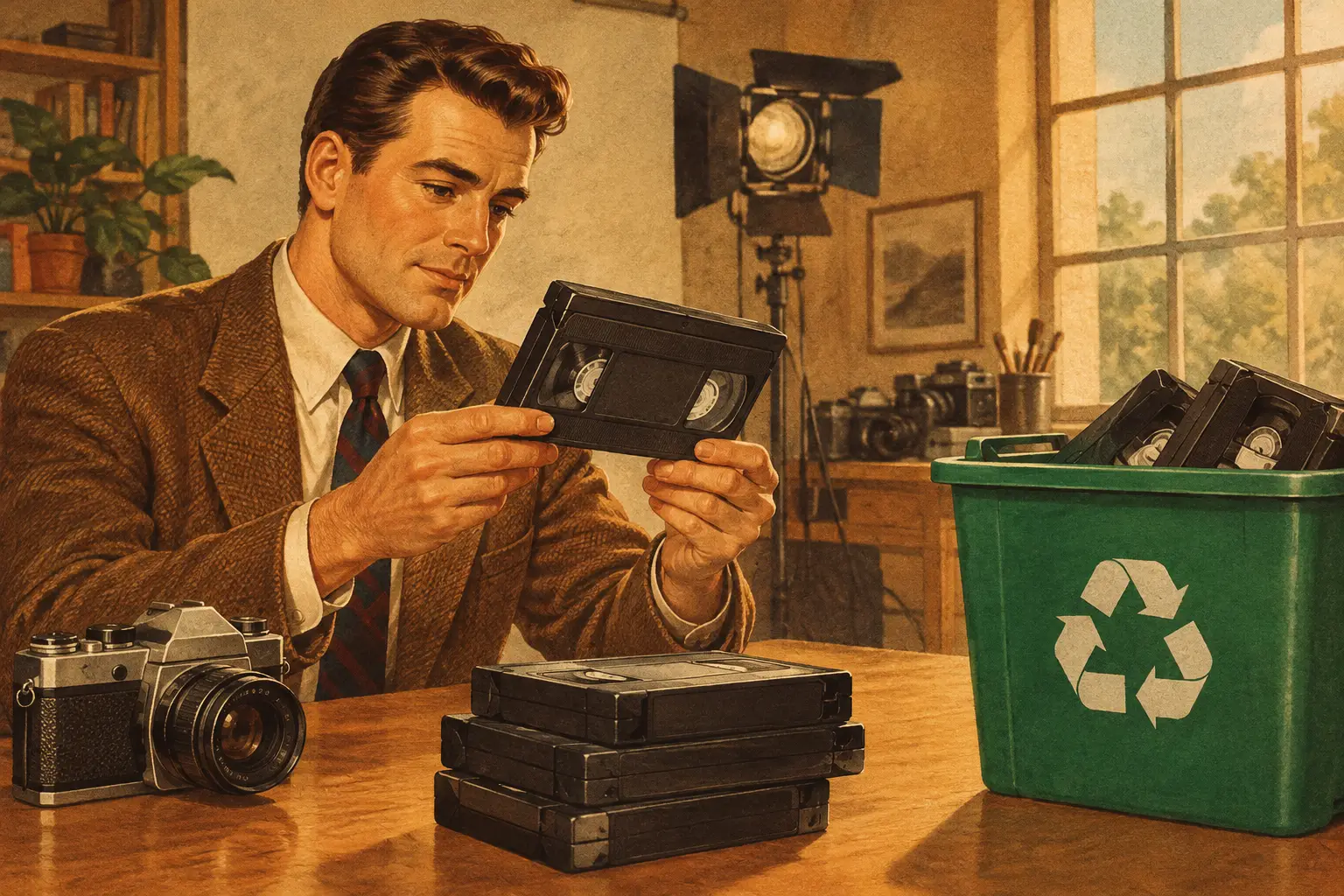
A box of VHS tapes can hold far more than old plastic. It may contain a child’s first steps, a wedding toast, a loved one’s voice, or a family gathering that exists nowhere else. So, are VHS tapes recyclable? Usually not through your regular curbside recycling bin. Before deciding what to do with them, take a moment to find out what is recorded on each tape. Once a tape is gone, its memories are gone with it.
Are VHS Tapes Recyclable in Curbside Bins?
For most households, the answer is no. VHS tapes are made from a mix of materials that municipal recycling programs are not designed to separate. The outer shell is typically plastic, but inside are magnetic tape, small metal parts, screws, and labels. Those mixed components can jam recycling equipment and contaminate other recyclable materials.
Putting VHS tapes in the recycling cart may feel like the responsible choice, but it often creates more work at the sorting facility. In many cases, the tape is removed and sent to the landfill anyway. Worse, loose magnetic tape can tangle machinery.
The same rule generally applies to cassette tapes, MiniDV tapes, and many other older media formats. They are not automatically accepted just because part of the item is plastic. Local rules vary, so a recycling facility may have a specialty collection option, but it is best to verify directly rather than assume the tape belongs in the bin.
Why VHS Tapes Are Difficult to Recycle
VHS tapes were built to protect recorded footage, not to be easily taken apart at the end of their life. The black or clear plastic housing, magnetic polyester tape, metal fasteners, and paper labels each need different handling. Separating those materials takes time and specialized equipment.
There is also a practical issue: many recyclers do not want the magnetic tape itself. It is thin, prone to tangling, and has limited value after processing. That means even facilities that accept certain electronics or rigid plastics may decline VHS tapes.
It is possible to disassemble a tape, but this is rarely a good at-home recycling project. Pulling out the tape creates a long, tangled mess that is difficult to contain, and the parts still may not be accepted locally. If the tape contains family footage, disassembly also removes any possibility of recovering it later.
Check the Tape Before You Let It Go
A tape marked “Christmas 1994” may sound ordinary until you realize it is the only recording of grandparents who are no longer here. Other labels are vague, missing, or inaccurate. Even blank-looking tapes may contain footage recorded years ago and forgotten.
Before donating, recycling through a specialty program, or disposing of a VHS tape, set aside time to review it. If you still have a working VCR, play a short section of each unlabeled tape. Handle tapes gently, especially if they have been stored in a hot attic, humid garage, or shed. Florida heat and humidity can be especially hard on magnetic media.
Look for visible mold, warped shells, a loose or crinkled tape ribbon, or a strong musty smell. These signs do not always mean the video is lost, but they do mean the tape needs extra care. Do not try to clean moldy tape with household cleaners or force it into a VCR. That can damage both the cassette and the player.
Preserve meaningful footage first
VHS is an aging format. The tape can degrade over time, while VCRs, replacement parts, and experienced repair options become harder to find. Digitizing important recordings preserves a viewable copy before another playback attempt, storage condition, or equipment failure puts the footage at risk.
A professional transfer can convert VHS footage to a digital file, DVD, USB drive, or cloud-ready format. The best choice depends on how you want to use the video. Digital files are easy to share with family members, while a USB drive provides a simple physical backup. Many families choose more than one format for added peace of mind.
For Jacksonville-area families with irreplaceable tapes, a local preservation service can offer a reassuring alternative to placing original media in the mail. AWV Production helps turn aging VHS recordings into high-quality digital keepsakes while keeping the process personal and straightforward.
Responsible Options for Tapes You No Longer Need
Once you have confirmed that a tape has no value to you or that its contents have been safely transferred, consider the condition of the cassette and the needs of your community. Reuse is often the most practical next step for clean, playable tapes.
A local thrift store, school media department, theater group, artist, or vintage collector may welcome VHS tapes and players, though acceptance policies change frequently. Call before dropping anything off. Donation makes the most sense for commercially produced movies, working blank tapes, or equipment that someone can realistically use.
Specialty recycling is another possibility. Some e-waste and hard-to-recycle collection services accept media tapes, but not all do. Ask specifically whether they take VHS tapes, not simply “electronics.” A program that accepts computers or TVs may still refuse videotapes.
If you cannot find a reuse or specialty recycling option, disposal in regular trash may be the appropriate local instruction. That is not the most satisfying answer, but placing a nonaccepted item in curbside recycling is not more environmentally helpful. Protect any private recordings first by digitizing what matters and, if necessary, destroying the tape so personal footage cannot be viewed by someone else.
Do Not Forget the VCR
The VCR itself should be handled separately from the tapes. Unlike VHS cassettes, a VCR is electronic equipment and may be accepted through e-waste collection, municipal drop-off events, or electronics recycling programs. Remove any tapes from the machine before taking it in.
If the VCR still works, consider keeping it until your transfer project is complete. It can be tempting to clear out everything at once, but old footage is harder to access once the playback equipment is gone. If a VCR is not working properly, avoid using it on a tape you cannot replace. A damaged machine can chew, crease, or snap fragile tape.
A Better Way to Clear Out Old Media
The most thoughtful approach is to sort first and discard last. Create three groups: tapes to preserve, tapes to donate or recycle through a specialty program, and tapes that can be discarded according to local guidance. This prevents an emotional decision from becoming a permanent loss.
For the preservation group, write down whatever you know about the recording: names, dates, events, and locations. That information becomes valuable once the footage is digitized and shared. A file named “Tape 12” is easy to overlook; “Dad’s retirement party, 2001” becomes a story someone will want to watch.
You do not need to keep every tape forever. The goal is not to fill your closet with outdated media. It is to make an intentional choice about what deserves to be saved, what can have a second life, and what has reached the end of its usefulness.
A VHS cassette may not fit neatly into a recycling bin, but the moments stored inside can still have a future. Give meaningful footage the chance to be preserved before you make room on the shelf.