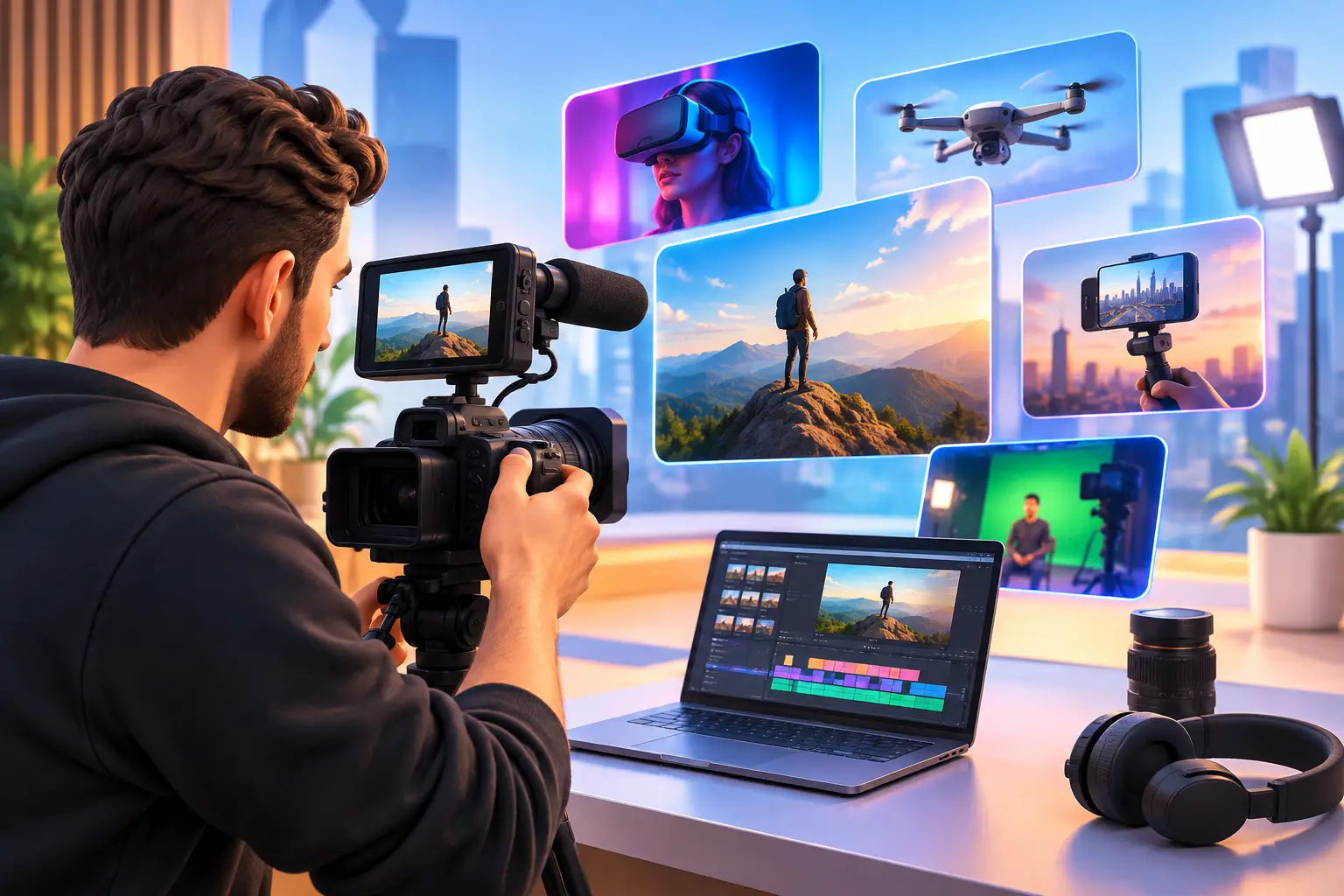
A polished video no longer has to feel oversized, overly scripted, or distant to make an impression. The video production trends shaping 2026 point toward something more valuable: work that feels real, serves a clear purpose, and remains useful long after the first post or event. For a Jacksonville family preserving irreplaceable footage or a local business explaining what it does best, the goal is the same. Create something worth keeping.
Video Production Trends Are Becoming More Human
For years, high production value was often associated with dramatic visuals, glossy sets, and fast editing. Those tools still have their place, particularly for major campaigns, luxury brands, and cinematic wedding films. But audiences have become better at recognizing when a message feels staged.
The strongest videos now pair professional production with genuine moments. A business owner speaking plainly about the problem they solve can be more persuasive than a heavily scripted sales pitch. A bride laughing with her parents before the ceremony may become one of the most meaningful moments in a wedding film, even if it was not planned.
This does not mean quality has become less important. Clear audio, thoughtful lighting, steady camera work, and skilled editing remain essential. The difference is that production choices should support the story rather than distract from it. Viewers want to feel that they are seeing the people, values, and memories behind the message.
Short-Form Video Needs a Bigger Plan
Short videos continue to earn attention because they are easy to watch and share. A quick customer testimonial, an aerial look at a property, or a behind-the-scenes moment from an event can give viewers an immediate reason to stop scrolling. Yet short-form content works best when it is part of a larger production plan.
A single well-planned shoot can create a main brand video, several short social clips, a customer story, and a version sized for vertical viewing. That approach helps small businesses make better use of their production budget without repeating the same message in every format.
The trade-off is that short video leaves very little room for confusion. The first few seconds need a clear visual or idea. If a viewer cannot tell what the video is about, why it matters, or who it is for, they may move on before the message begins. Good editing is not simply about making footage shorter. It is about protecting the most meaningful part of the story.
Vertical video is now a planned deliverable
Vertical video is no longer an afterthought reserved for casual phone recordings. It is a practical format for social platforms, mobile viewing, event promotions, real estate highlights, and quick business updates. Planning for vertical framing while filming can prevent important details from being cut out later.
That said, horizontal video still matters for websites, presentations, television displays, and longer-form viewing. Many projects benefit from capturing footage with both formats in mind. A professional production team can build a shot plan that gives each version the room it needs instead of forcing one crop to do every job.
Documentary-Style Storytelling Builds Trust
Businesses are moving away from broad claims and toward proof. Rather than saying a company provides exceptional service, a video can show the team at work, let a client describe their experience, or follow a process from start to finish. This documentary-style approach feels more credible because it gives viewers something tangible to see.
For organizations, this can mean employee interviews, customer testimonials, training videos, day-in-the-life footage, or event coverage that captures real energy. For families, it can mean recording interviews with parents and grandparents alongside digitized home movies, photographs, and audio recordings. The finished piece becomes more than a collection of clips. It becomes context for the memories people want to pass on.
The best documentary-style videos still need direction. A relaxed interview is not the same as an unprepared one. Questions should invite meaningful answers, locations should be quiet enough for clean sound, and the editor should have enough supporting footage to create a natural rhythm. Careful planning is what makes authenticity feel effortless on screen.
AI Helps With Workflow, Not With Meaning
Artificial intelligence is influencing video production through transcription, caption creation, rough-cut organization, audio cleanup, and other time-saving tasks. These tools can help a production team work more efficiently, especially when reviewing long interviews or producing multiple social edits.
But AI is not a substitute for a thoughtful producer, videographer, or editor. It cannot fully understand which pause in an interview reveals emotion, which family photo carries a deeper story, or which visual detail will matter most to a client years from now. Those decisions depend on listening closely and knowing the purpose of the project.
There is also a trust consideration. AI-generated images, voices, and altered footage may be useful in limited creative situations, but they should be handled carefully. For personal memories, wedding films, testimonials, and brand communication, viewers expect honesty. Real people and real moments remain the foundation of lasting video.
Captions and Clear Audio Are Part of the Experience
Video is often watched in places where sound is off or background noise is high. Captions have become a practical part of making content easier to follow, not merely an optional add-on. They can help viewers understand a message while waiting in line, watching at work, or dealing with hearing challenges.
Captions cannot rescue poor audio, though. A beautiful image paired with muffled dialogue can make even the best story difficult to follow. Professional microphones, smart location choices, and careful audio mixing deserve attention from the beginning of a project.
For older media, audio can be just as precious as video. A voicemail, cassette recording, or interview with a loved one may hold details no photograph can preserve. Transferring and restoring those recordings gives families another way to protect the voices that matter to them.
Drone Footage Is Most Effective When It Has a Purpose
Aerial video remains a powerful way to establish scale and location. It can show the setting of a waterfront wedding, the layout of a commercial property, the energy of an outdoor event, or the character of a local destination. For businesses, drone footage can add visual variety that standard ground-level shots cannot provide.
Still, the most effective drone footage has a reason for being there. A sweeping aerial shot should introduce a place, reveal a feature, or create a transition that supports the larger story. Too many drone shots can make a video feel repetitive or slow, particularly in short-form content.
Safety, local conditions, weather, and airspace restrictions also shape what is possible. A professional drone operator plans for these realities instead of promising a shot that cannot be captured responsibly. The right aerial moment can be unforgettable, but it should be one part of a well-rounded production.
Preservation and Production Are Coming Together
One of the most meaningful video production trends is the growing desire to connect old memories with new storytelling. Families are not only transferring VHS tapes, film reels, photographs, and audio recordings for storage. They are using those materials to create tribute videos, anniversary films, memorial pieces, and family history projects.
This approach gives aging media a new life while protecting the originals from further wear. It also allows families to organize their history in ways that are easier to watch and share. A cloud-ready digital file may be convenient, while a USB drive or DVD can give relatives a tangible keepsake. The best choice depends on who will use the video and how they prefer to preserve it.
For businesses, the same principle applies. A brand video should not disappear after one campaign. With a thoughtful plan, footage can support recruiting, training, website messaging, presentations, future social posts, and event promotions. Content with a longer useful life offers more value than a one-time upload.
What to Prioritize Before Your Next Video Project
Trends can provide useful direction, but they should not decide the project for you. Before filming begins, identify the audience, the main message, and what success should look like. A wedding film may be measured by emotion and completeness. A corporate video may need to increase inquiries, train employees, or make a complicated service easier to understand.
It also helps to discuss how the footage will be delivered and used. Will you need horizontal and vertical edits? Captions? Short clips in addition to a longer video? A digital copy for easy sharing, or a physical format for safekeeping? Addressing these questions early leads to a smoother filming day and a more useful final product.
At AWV Production, the focus is not on chasing every trend. It is on using the right tools, thoughtful planning, and collaborative editing to protect meaningful memories and tell stories people can recognize as their own. The most lasting video is not the one that follows every new style. It is the one someone will still be grateful to watch years from now.