A family history video interview can capture something a written family tree never can: the pause before a favorite childhood memory, the laugh that comes with an old family joke, and the voice behind a story everyone has heard only in pieces. These details become more meaningful with time. A professionally recorded conversation gives children, grandchildren, and future relatives a chance to know a loved one as a real person, not simply a name and date.
The best interviews do not feel like a test or a formal speech. They feel like time set aside to listen. With a little preparation, thoughtful questions, and careful recording, a family interview can become one of the most cherished pieces of your family archive.
Start With the Person, Not the Timeline
It is tempting to begin with a long list of dates, places, and relatives. Those facts matter, but they should support the story rather than lead it. Start with the memories that make the person in front of the camera feel comfortable and recognizable.
Ask about the home where they grew up. What could they see from the front porch? Who cooked in the family, and what did the kitchen smell like on a holiday? What was a typical Saturday like? These questions are easy to answer, and they often bring out the small details that disappear from official records.
Once the conversation is moving, the larger family history tends to emerge naturally. A grandmother may mention why her parents moved to Florida. A grandfather may describe his first job, military service, or the moment he met his spouse. Let the conversation take a few unexpected turns. A memory that seems minor at first can become the story your family talks about for decades.
Prepare a Family History Video Interview With Care
A good interview benefits from planning, but over-planning can make it feel stiff. Create a loose outline rather than a script. Decide which chapters of life you hope to cover, then leave room for follow-up questions and quiet reflection.
Before recording, talk with the interviewee about what to expect. Let them know there are no perfect answers and no pressure to remember every detail precisely. This reassurance matters, especially for someone who is not used to being on camera. They should also have the option to skip subjects that feel too private or painful.
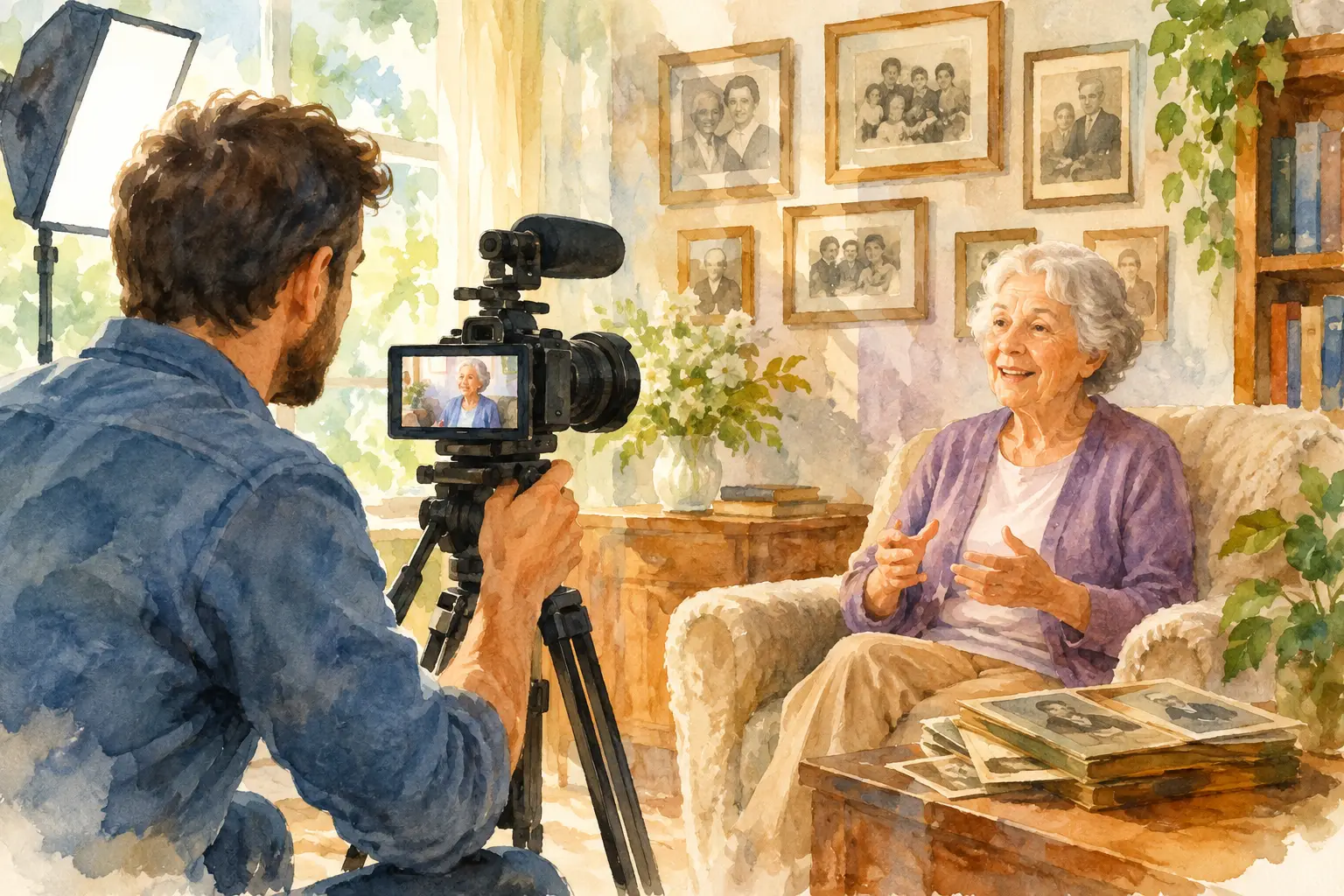
Gathering a few meaningful items can make the conversation more personal. Old photographs, letters, recipe cards, military keepsakes, school yearbooks, wedding albums, and even a familiar quilt can prompt stories that might not arise otherwise. If you plan to show these items in the finished video, set them aside in advance so they are easy to access.
It also helps to invite family members to share questions beforehand. Adult children and grandchildren often think of things the interviewer might miss, such as a loved one’s favorite saying, their first car, a family tradition, or advice they would want to pass on. Keep the final question list manageable, though. An interview should feel like a conversation, not an appointment with a clipboard.
Questions That Invite Real Stories
Open-ended questions work better than questions that can be answered with yes or no. Rather than asking, “Did you like school?” ask, “What do you remember most about your school days?” Rather than asking, “Were you close to your siblings?” ask, “Tell me what your brothers or sisters were like when you were young.”
A well-rounded interview often includes four kinds of questions:
- Childhood and family life, including homes, traditions, favorite relatives, and everyday routines.
- Milestones, such as school, work, marriage, parenthood, moves, and major turning points.
- Personal perspective, including lessons learned, proud moments, difficult seasons, and sources of joy.
- Legacy questions, such as what they hope younger family members remember or carry forward.
Follow-up questions make the difference between a brief answer and a lasting story. If someone says they worked at a local store as a teenager, ask what their first day was like, how much they earned, who they worked with, and what that job taught them. Gentle curiosity shows that their memories are worth hearing in full.
Create a Calm, Comfortable Recording Space
The setting should support the person, not compete with them. Choose a quiet room with soft, even light and a background that feels tidy but natural. A familiar living room, study, or porch may be more comfortable than a formal studio. Avoid rooms with loud air conditioning, television noise, ringing phones, or bright windows directly behind the subject.
Sound deserves special attention. Families often focus on picture quality, but unclear audio can make an otherwise beautiful video hard to watch. A professional microphone helps preserve a clear, warm voice and reduces distracting room noise. This is especially valuable when recording an older family member whose voice may be softer.
Comfort also affects the final result. Use a supportive chair, offer water, and allow enough time that no one feels rushed. Many people need ten or fifteen minutes to settle in before their most natural stories begin. Plan for breaks if the interview is lengthy, particularly when discussing emotional subjects.
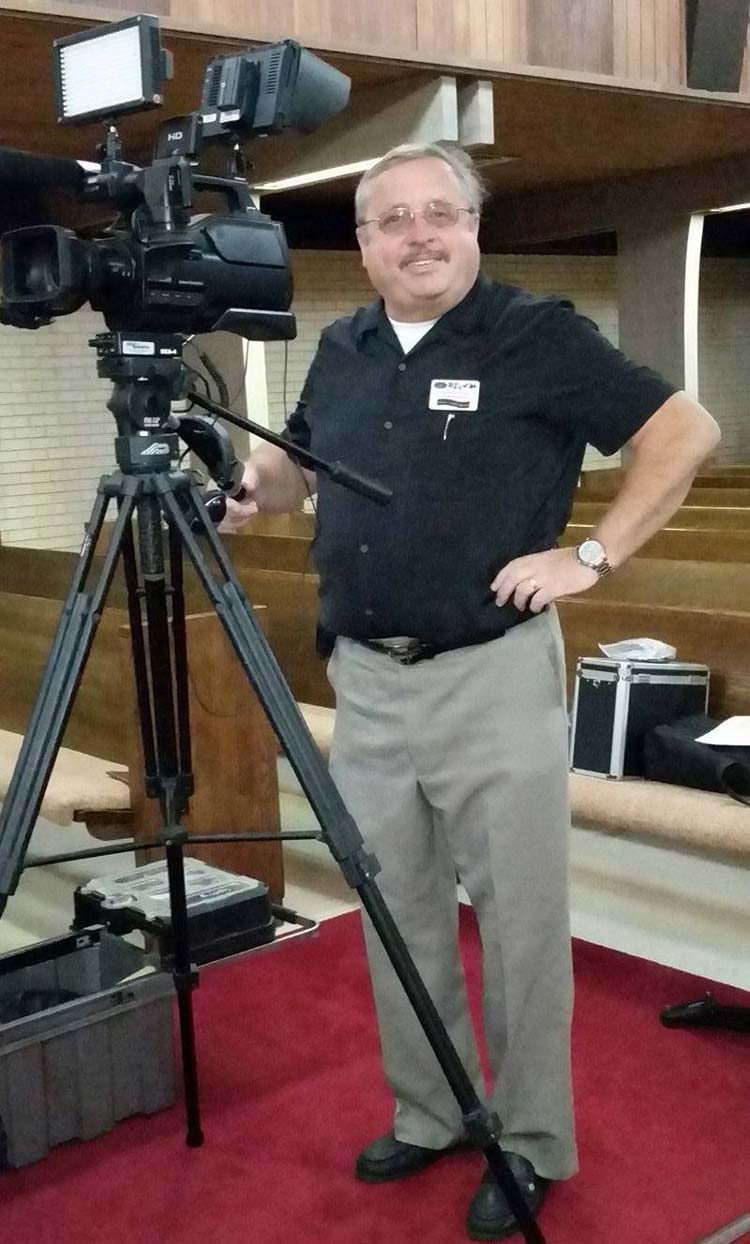
Professional lighting, cameras, and audio equipment can give the finished piece a polished, high-definition look. Still, the goal is not to make a loved one look overly staged. A thoughtful production should feel warm and honest, with the person’s voice and expressions at the center.
Preserve More Than One Version of the Story
A family history recording is not just a video to watch once at a reunion. It is a piece of family history that deserves a preservation plan. Keep the original recorded files whenever possible, along with the edited version. The original conversation may contain names, stories, or side comments that become valuable later.
Consider creating two editions. A longer archival version can preserve the interview in depth, while a shorter edited film can highlight the most meaningful moments for sharing at a birthday, anniversary, memorial gathering, or family celebration. Neither version replaces the other. One protects the full record; the other makes the story easy to revisit and share.
Store copies in more than one place. A USB drive or external hard drive is useful, but it should not be the only copy. Cloud storage offers another layer of protection, and a second physical copy can be kept with a trusted family member. Label files clearly with the person’s name, recording date, and location. Future relatives should not have to guess what they are opening.
If your family has VHS tapes, film reels, cassette recordings, or printed photographs connected to the interview, consider preserving those materials alongside it. A voice recorded years ago, a wedding clip, or a faded photograph can add powerful context to the stories being told. Bringing older media into a durable digital format helps keep the entire collection accessible.
When Professional Help Is Worth It
A phone recording can be a meaningful starting point, especially if time is limited. But for an interview meant to become a lasting family keepsake, professional support can ease the pressure on everyone involved. The family can stay present in the conversation instead of monitoring microphones, checking camera framing, and worrying whether a treasured answer was captured clearly.
A professional video team can guide the interview at a comfortable pace, record clean audio and high-quality visuals, and shape the footage into a finished piece that feels personal rather than generic. Collaborative editing is especially helpful when families want to include photos, home movies, music, or titles identifying relatives and places.
For Jacksonville-area families, AWV Production approaches these projects with both technical care and respect for what is being entrusted. The goal is not simply to record an interview. It is to protect a voice, a point of view, and the stories that help a family understand where it came from.
Do not wait for the “perfect” occasion to ask someone to sit down and talk. Bring out a photograph, make a quiet afternoon of it, and begin with a simple question: “What do you remember?” Often, that is all it takes for an unforgettable story to begin.